
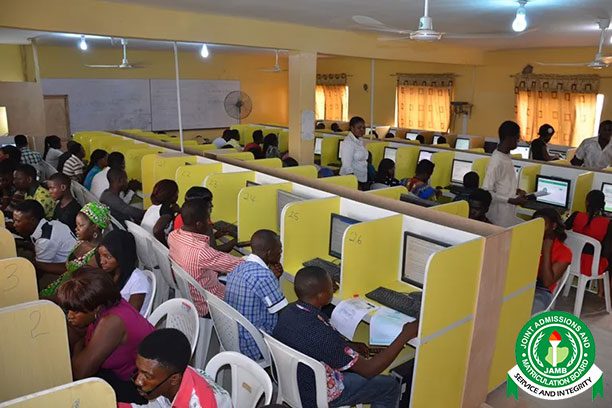
Biology inside JAMB is wide, but the good thing is that JAMB repeats topics every single year. If you know what to expect, reading becomes easier.
Let me guide you through it one step at a time.
Why the Syllabus Matters
Many students read Biology like storybook. They jump from topic to topic without direction. But the thing is; the syllabus shows you exactly what JAMB wants you to study.
If you follow the syllabus well, you will not miss the topics that carry the highest marks.
You will also know:
- What to read
- What to leave for later
- What questions JAMB likes to repeat
- How deep your reading should go
Have you ever opened a textbook and felt confused about where to start? The syllabus removes that confusion.
How JAMB Sets Biology Questions
JAMB follows a pattern. If you check past questions, you will see that some topics appear every year without fail.
Here is what JAMB usually tests:
- Your understanding of basic Biology terms
- Your ability to apply ideas, not just memorize
- Your knowledge of diagrams
- Your speed in answering simple questions correctly
JAMB does not ask extremely hard Biology questions. But it asks tricky ones that check if you truly understand the topic or if you just crammed it.
So your goal is to understand each topic simply, not to memorize big grammar.
Key Areas JAMB Tests Every Year
When you check past Biology questions, you will notice that JAMB does not scatter questions anyhow. They focus on some major areas almost every year. If you understand these areas well, you will score high with less stress.
Let me break them down for you.
Life Processes
Every living thing carries out certain activities to stay alive. JAMB loves asking questions from these areas because they are the foundation of Biology.
Here are the main life processes you must know:
1. Nutrition
You need to understand how plants and animals get food.
JAMB likes questions on:
- Photosynthesis
- Classes of food
- Types of nutrition (autotrophic and heterotrophic)
You may see a question like: “Which part of the leaf absorbs sunlight?” Simple but easy marks if you read well.
2. Respiration
This one is always repeated.
You must know the difference between:
- Aerobic respiration
- Anaerobic respiration
You also need simple equations of respiration; nothing too deep.
3. Excretion
Many students confuse excretion with egestion. JAMB always tests this mistake.
Know the roles of:
- Kidney
- Lungs
- Skin
These topics are simple marks if you study them well.
Structure and Functions of Living Cells
This is the backbone of Biology. JAMB cannot set an exam without touching cell topics. They love diagrams too, so make sure you can recognize parts of the cell.
Here are the main areas:
1. Cell Structure
You must know:
- Cell membrane
- Nucleus
- Mitochondria
- Chloroplast
- Cell wall
Also understand the differences between:
- Plant cells and animal cells
- Prokaryotic and eukaryotic cells
JAMB repeats this every year.
2. Cell Functions
You should know:
- How substances move in and out of cells (osmosis, diffusion)
- How cells divide (mitosis and meiosis)
- How cells form tissues and organs
These questions are usually simple if you read quietly and understand the definitions.
Read also: JAMB Registration 2026: Dates, Requirements, How to Apply, and Full Guide
Most Repeated Topics in JAMB Biology
1. Cell Structure
What JAMB asks about cells
Questions on cells appear every year. You must know parts of the cell, what each part does, and how plant and animal cells differ. JAMB may give a diagram and ask you to name parts, or give a function and ask which organelle does it.
Easy things to remember
- Nucleus: control center; holds genes.
- Mitochondria: power house; where energy (ATP) is made.
- Chloroplast: site of photosynthesis in plant cells.
- Cell membrane: thin skin that controls what goes in and out.
- Cell wall (plants): stiff layer outside the cell membrane; gives shape.
Common question types
- Label a diagram of a cell.
- Which organelle makes energy? (Answer: mitochondria.)
- Difference between plant and animal cell: plant cells have chloroplasts and cell wall; animal cells do not.
If a diagram is shown, use process of elimination on the options; JAMB likes to test small differences.
2. Ecology
What JAMB asks in ecology
Ecology questions come often; they test food chains, food webs, energy flow, pollution, and human impact on the environment.
Key words to know
- Producer: makes food by photosynthesis (plants).
- Consumer: eats other organisms (herbivores, carnivores).
- Decomposer: breaks down dead matter (fungi, bacteria).
- Food chain and food web: show who eats whom.
- Biomass and energy transfer: energy drops as you go up the chain.
Nigerian example
In a savanna food chain: grass → grasshopper → frog → snake → hawk. If farmers clear grasslands, that chain breaks; JAMB might ask what happens to the hawk population.
Common question types
- Identify producers and consumers in a diagram.
- Calculate simple energy transfer (e.g., 10% rule).
- Effects of pollution; example: oil spill harm to mangrove ecosystems.
Draw short food chains when asked; it helps you avoid confusion.
3. Genetics and Heredity
What JAMB tests here
Genetics appears a lot; questions cover Mendel’s ideas, monohybrid crosses, dominant and recessive traits, and simple pedigree or Punnett square questions.
Important concepts
- Gene: unit of heredity.
- Allele: version of a gene (e.g., B or b).
- Genotype: genetic makeup (e.g., Bb).
- Phenotype: visible trait (e.g., brown eyes).
- Dominant and recessive: dominant mask recessive.
Example problem (simple Punnett square)
If one parent is BB (brown eyes) and the other is bb (blue eyes), all children are Bb and show brown eyes.
Real Nigerian context
JAMB sometimes uses sickle cell trait in examples. Sickle cell trait is common in parts of Nigeria; a simple genetics question might ask about carrier parents and probability of children being affected.
Practice drawing 2×2 Punnett squares; they solve most JAMB heredity questions.
4. Evolution and Adaptation
What JAMB asks
Questions here test how species change over time and why some traits help survival. Expect short definitions and simple application questions.
Key ideas
- Variation: individuals differ.
- Natural selection: organisms with useful traits survive and reproduce more.
- Adaptation: a trait that helps survival (e.g., long legs for running).
Example
If a plant in a dry area develops deeper roots, it survives drought better; JAMB may ask what this is called (adaptation).
Use local examples when you study; e.g., drought-tolerant crops or sunscreen-like skin pigments — they stick in your mind.
5. Reproduction
Reproduction is split into human (animal) reproduction and plant reproduction; both are high-frequency JAMB topics.
Human Reproductive System (Male and Female)
What JAMB asks
- Names and functions of organs; e.g., testis makes sperm, ovary makes eggs.
- Hormones roles; e.g., estrogen, progesterone, testosterone.
- Fertilization basics and menstrual cycle items.
Simple facts to memorize
- Testes produce sperm and testosterone.
- Ovaries produce eggs and female hormones.
- Fallopian tube (oviduct) is where fertilization usually happens.
- Placenta supplies baby with food and oxygen in pregnancy.
Label diagrams quickly; that’s a sure way to get marks.
6. Plant Reproductive System
What JAMB asks
- Parts of a flower and their functions (stamen, pistil, petals).
- Pollination types: wind or insect pollination.
- Difference between self-pollination and cross-pollination.
- Seeds and dispersal methods.
Common examples
- Maize: wind pollinated.
- Cotton or tomato: insect pollinated.
When asked about pollination, name the agent (wind, water, insect) and one feature of the flower that fits that agent.
Other High-valued Topics (short notes)
Transport in Plants and Animals
- Xylem and phloem roles; blood circulation basics (heart chambers, arteries vs veins).
Nutrition
- Photosynthesis equation; parts of digestive system and their functions.
Excretion
- Kidney function; urine formation basics.
Cell Division
- Mitosis: growth and repair; produces identical cells.
- Meiosis: makes sex cells; reduces chromosome number.
Table: Topics JAMB Repeats Often
| Very Frequent | Frequent | Occasional |
|---|---|---|
| Cell Structure & Functions | Ecology (food chains, pollution) | Microbiology |
| Genetics & Punnett squares | Reproduction (human & plant) | Biotechnology basics |
| Photosynthesis & Respiration | Transport systems | Detailed biochemistry |
| Evolution & Adaptation | Excretion & Nutrition | Advanced genetics |
Use this table to plan study time; focus more on the left column.
Study Tips for These Topics
- Make small flashcards for organelle functions and flower parts; carry them on public transport.
- Draw simple diagrams for cells, heart, and flower; drawing helps memory.
- Use local examples; they make facts stick (e.g., crop pollination, local diseases like malaria when talking about life cycles of parasites).
- Practice past questions on each of these topics until you can answer fast.
Read also: JAMB Mathematics Syllabus 2026: Key Topics Students Must Focus On
Breakdown of the JAMB Biology Syllabus 2026
This part gives you the full list of topics inside the JAMB Biology syllabus. I will explain each one in simple way so you can understand it the first time you read it.
If you study everything in this section, you will cover almost 90 percent of what JAMB likes to ask.
Organization of Life
Living things have levels of organization; JAMB loves this topic because it is the foundation of Biology.
Cells
Cells are the smallest units of life. Everything in Biology starts from here.
What to know:
- Cells are the building blocks of plants and animals.
- Plant cells have a cell wall, chloroplast, and a large vacuole.
- Animal cells do not have a cell wall or chloroplast.
Questions you will see
- Label simple diagrams.
- Identify organelles and their functions.
- Difference between plant and animal cells.
Note: Anything green belongs to plants; anything with strong walls belongs to plants too.
Tissues
A group of similar cells forms a tissue.
Examples:
- Muscle tissue
- Nerve tissue
- Blood
- Plant tissues like xylem and phloem
What JAMB asks
- Functions of each tissue
- Differences between simple and complex tissues
- Why some tissues are found in certain parts of the body
Nutrition
Nutrition covers how living things get food. JAMB repeats this every year.
Plant Nutrition
Main points:
- Plants make their own food through photosynthesis.
- They need sunlight, water, carbon dioxide, and chlorophyll.
- Glucose is made; oxygen is released.
JAMB’s style of question
They may ask the part of the leaf that traps sunlight, the reason stomata open, or the “by-products” of photosynthesis.
Note: Photosynthesis happens inside chloroplasts; they contain chlorophyll.
Animal Nutrition
What to know:
- Types of teeth and their functions
- Digestive system organs
- Enzymes and what they break down
Common exam trick
JAMB likes to ask which enzyme acts on which food. Example:
- Amylase breaks starch
- Lipase breaks fat
- Pepsin breaks protein
Transport System
This topic always comes out. You must know transport in both plants and animals.
Transport in Plants
Key points:
- Xylem moves water and minerals upward.
- Phloem moves food (glucose) around the plant.
- Transpiration helps water movement.
Common questions
- Difference between xylem and phloem
- Why water moves up in plants
- Factors that affect transpiration (sunlight, humidity, wind)
Transport in Animals
This includes the circulatory system.
What to know:
- Heart parts and chambers
- Blood vessels: arteries, veins, capillaries
- Blood functions
JAMB’s favorite trick
They love comparing arteries and veins:
- Arteries have thicker walls
- Arteries carry blood away from the heart
- Veins have valves
- Capillaries are tiny with thin walls
Respiration
Respiration is the way living things (plants, animals, even tiny microbes) get energy from food.
How it works:
- We breathe in oxygen.
- Our cells use that oxygen to break down glucose (a type of sugar from food).
- This makes energy that powers everything we do, moving, growing, thinking.
- The waste product, carbon dioxide, is breathed out.
Aerobic Respiration
Oxygen is used.
Energy is released.
This is the normal type of respiration.
Equation to remember:
Glucose + Oxygen → Energy + Water + Carbon dioxide
Anaerobic Respiration
Happens when there is no oxygen.
Less energy is produced.
This is used during quick, heavy activities like running.
In muscles:
Glucose → Lactic acid + Energy
Excretion
Excretion is how living things get rid of waste from their bodies. It’s the process of removing substances that the body doesn’t need or that could be harmful if they stay inside.
Why it happens:
When our cells work, they produce waste (like carbon dioxide, urea, sweat). These wastes must be removed so the body stays healthy.
How it works in humans
- Lungs remove carbon dioxide when we breathe out.
- Kidneys filter blood and make urine to remove urea and extra water.
- Skin removes waste through sweat.
In plants
They also excrete waste, like oxygen (a by-product of photosynthesis) and substances through leaves, roots, or bark.
Growth
Growth is the process of getting bigger and stronger over time. It’s how living things increase in size, develop new parts, and become more mature. Growth comes from cell division.
Mitosis
- What it is: Mitosis is how body cells make copies of themselves.
- Why it happens: It helps us grow and replace old or damaged cells.
- How it works:
- One cell splits into two identical cells.
- Each new cell has the same number of chromosomes (the “instruction books” inside cells).
- Example: When you get a cut, mitosis makes new skin cells to heal it.
Meiosis
- What it is: Meiosis is how special cells (like sperm and egg cells) are made.
- Why it happens: It’s needed for reproduction.
- How it works:
- One cell splits into four new cells.
- Each new cell has half the number of chromosomes.
- This way, when sperm and egg join, the baby gets the right total number of chromosomes.
- Example: Meiosis makes eggs in females and sperm in males.
Read also: Jamb Syllabus for all Subjects 2026: What to Read Before the Exam
Key Difference
| Feature | Mitosis (Growth/Repair) | Meiosis (Reproduction) |
|---|---|---|
| Number of cells made | 2 identical cells | 4 different cells |
| Chromosome count | Same as original cell | Half of original cell |
| Purpose | Growth & repair | Making sperm/eggs |
Quick Analogy
Think of it like this:
- Mitosis = photocopy machine → makes exact copies of a page.
- Meiosis = cutting a recipe in half → so when two halves (egg + sperm) come together, you get the full recipe again.
JAMB question pattern
They love asking the difference between mitosis and meiosis.
Reproduction
Reproduction is how living things make new living things. It’s the process that allows life to continue from one generation to the next. This is one of the most repeated topics in JAMB.
Simple Explanation of Reproduction
- What it is: Reproduction means producing offspring (babies, young plants, or new organisms).
- Why it happens: Without reproduction, living things would eventually die out.
- Types of reproduction:
- Asexual reproduction: One parent makes offspring. The new organism looks almost exactly like the parent.
- Example: A plant growing a new shoot, or bacteria dividing.
- Sexual reproduction: Two parents (male and female) combine their special cells (sperm and egg) to make offspring. The new organism is similar but not identical to the parents.
- Example: Humans, animals, and most plants.
- Asexual reproduction: One parent makes offspring. The new organism looks almost exactly like the parent.
Why Reproduction is Important
- Keeps species alive.
- Passes on traits (like eye color, height, or flower shape).
- Allows variation, which helps living things adapt to changes in their environment.
Quick Analogy
Think of reproduction like saving a copy of a favorite book:
Sexual reproduction = mixing two stories together → the new book has parts from both originals, but it’s unique.
Asexual reproduction = photocopying the book → the copy looks exactly the same.
Coordination and Control
Coordination and Control is how the body makes sure all its parts work together properly. It’s like the “management system” of living things that keeps everything organized and balanced. It covers hormones and the nervous system.Simple Explanation
Coordination
- Means linking different parts of the body so they work together.
- Example: When you see food, your eyes send a message to your brain, your hands reach out, and your mouth gets ready to eat.
Control
- Means guiding and regulating body activities.
- Example: Your brain controls your heartbeat, breathing, and movement so they happen at the right time and speed.
How It Works:
Together, they make sure the body responds correctly to changes inside and outside.
Nervous system (brain, spinal cord, nerves): Sends quick messages to different parts of the body.
Hormones (from glands): Act like chemical messengers that control slower processes, like growth or mood.
JAMB loves asking about reflex actions because they are quick responses.
Evolution
Evolution is the slow change in living things over a very long time. It explains how plants, animals, and humans today are different from those that lived millions of years ago. This topic is not long but it appears often.
Simple Explanation of Evolution
Evolution is the process by which living things change and develop new features across generations.
How it happens
- Living things have small differences (variations).
- Some differences help them survive better in their environment.
- Those that survive pass these helpful traits to their offspring.
- Over many generations, these changes add up, and new species can form.
Example: Giraffes with slightly longer necks could reach more food. Over time, giraffes evolved to have very long necks.
Why Evolution is Important
- Explains the diversity of life on Earth.
- Shows how species adapt to changing environments.
- Helps us understand our own origins as humans.
Natural Selection
Natural selection is the process where living things with helpful traits survive and pass those traits to their offspring.
How it works
- In a group, individuals show variation (differences).
- Some variations make them better suited to their environment.
- Those individuals survive more easily and have more babies.
- Over time, the helpful traits become common in the group.
Example:
Eventually, most insects in that forest are green.
In a forest, green insects blend in with leaves, while brown insects are easier for birds to spot.
The green insects survive longer and reproduce more.
Variation
Variation means differences between living things of the same kind.
Examples:
- People have different heights, skin colors, or hair types.
- Dogs of the same breed may have slightly different sizes or markings.
Why Variation is Important
Variation is important because it helps living things survive, adapt, and evolve in changing environments. Without differences between individuals, species would struggle to cope with challenges like diseases, climate changes, or competition for food.
Ecology
This is one of the biggest topics in Biology.
Ecology is a branch of biology that focuses on relationships between living things (like plants, animals, and humans) and their surroundings (like air, water, soil, and climate). All living things are connected. What happens to one part of the environment can affect many others.
Examples:
- Bees pollinate flowers, helping plants grow.
- Trees provide oxygen and shelter for animals.
- Humans depend on clean water, fertile soil, and balanced ecosystems to survive.
Why Ecology is Important
- Protects nature: Helps us understand how to care for forests, rivers, and oceans.
- Balances life: Shows how species depend on each other for food, shelter, and survival.
- Solves problems: Helps us deal with issues like pollution, climate change, and endangered species.
Food Chains
A food chain shows how energy passes from one living thing to another. It’s a simple way of explaining “who eats what” in nature.
How it works:
- Plants (producers) make their own food using sunlight.
- Herbivores (plant-eaters) eat the plants.
- Carnivores (meat-eaters) eat the herbivores.
- Top predators eat other animals but are not usually eaten themselves.
Example: Grass → Grasshopper → Frog → Snake → Eagle
Why Food Chains is Important
- They show how energy flows through nature.
- They explain how all living things are connected.
- If one part of the chain is removed (like if frogs disappear), the whole chain is affected.
Energy Flow
Energy flow is how energy moves through living things in nature. It shows the path of energy as it starts from the sun and passes through plants, animals, and finally back to the environment. Energy reduces as you go up the chain.
Pollution
Pollution is when harmful substances get into the environment and make it unsafe for living things. It happens when air, water, or land is made dirty by things that don’t belong there.
Covers: Water pollution, Air pollution and Soil pollution.
JAMB often uses Nigerian examples like oil spillage.
Table of High-Frequency Biology Topics
This table shows topics JAMB asks about most often; focus on the left column first. I got the syllabus from JAMB’s official IBASS system so you can trust this plan.
| Very frequent (study first) | Frequent (study well) | Less frequent (don’t ignore) |
|---|---|---|
| Cell structure & functions | Transport systems | Microbiology basics |
| Photosynthesis & respiration | Reproduction (human/plant) | Biotechnology intro |
| Genetics & Punnett squares | Ecology & ecosystems | Detailed biochemistry |
| Evolution & adaptation | Excretion & nutrition | Lab techniques terms |
| Plant structure & pollination | Growth & cell division | Advanced molecular topics |
Bold plan: start with the left column and practice past questions on those topics first.
How to Study the Syllabus Without Stress
Studying the JAMB syllabus can feel like a lot of work, but with the right approach, you can make it simple and stress‑free. I will show you a simple way to study the official syllabus so it feels doable.
1. Split the syllabus into bite-size units
- Treat each topic (like Cell Structure, Photosynthesis) as a unit; study one unit per day or two.
- I recommend: 45–60 minutes focused study; then 15 minutes practice questions.
2. Use simple notes and diagrams
- Draw a cell and label parts rather than writing long paragraphs.
- For ecology, draw short food chains; for reproduction, label the organs.
Small drawings help you remember better.
3. Practice with purpose
- After each unit, solve 5 past questions on that unit. Time yourself. Check mistakes and write a one-line note on what you missed.
- Do not just memorize answers; understand steps.
4. Weekly review
- Spend a day each week just revising what you covered; this keeps your memory strong.
If you do this, you will feel calmer and more ready.
Past Question Patterns in JAMB Biology
Understanding how JAMB uses the syllabus helps you study smart.
- JAMB often tests definitions, diagrams, and short applications. They ask “name this part”, “what does this do”, or “what happens if…”.
- Many questions repeat themes such as cell organelles, photosynthesis equation, Punnett square crosses, and parts of the heart. Practice shows these come up every year.
- Diagrams are common; you must be able to label and read simple diagrams quickly.
- Calculation style: very simple calculations appear sometimes (e.g., percentage survival, basic energy transfer numbers); they test understanding, not heavy math.
How to use this: when you practice past questions, mark which topics repeat; give extra time to those topics.
Read also: JAMB 2025/2026 Mathematics Past Questions to Practice
Textbooks
Use the official JAMB syllabus first; then pick 2 good books and 1 trusted online source. The official JAMB IBASS system lists the syllabus and recommended texts.
Recommended books (easy to follow)
- New Biology for Senior Secondary School (popular edition used in many schools).
- Essentials of Biology for JAMB (past question + answers style).
- Any standard WAEC/NECO Biology textbook used in your school.
Sample Study Timetable (Step by step)
Use this as a template; adjust it to your school routine.
Daily plan (2–3 hours)
| Time | Activity |
|---|---|
| 6:00–6:45 am | Revise yesterday’s small notes; quick flashcards |
| 6:50–7:50 am | Study one full unit (read + diagram) |
| 7:50–8:00 am | Quick break; rest eyes |
| 8:00–8:30 am | Solve 5 past questions on that unit |
| Evening (30–60 mins) | Watch a short video or redo the hardest question |
Weekly rotation (example)
- Mon: Cells + Tissues
- Tue: Nutrition (plant & animal)
- Wed: Transport + Respiration
- Thu: Reproduction + Growth (mitosis/meiosis)
- Fri: Genetics + Evolution
- Sat: Ecology + Human physiology (heart, kidney)
- Sun: Past questions mixed; review weak spots
Small wins: Each week tick off units you fully understand; this builds confidence.
Exam Day Tips for Biology
On the day, small choices make big difference.
Before the exam
- Sleep well the night before; don’t cram all night.
- Eat a light breakfast; carry a bottle of water.
In the exam hall
- Read every question once quickly; start with the easiest.
- Answer diagrams first if they look easy; these are fast marks.
- Manage time; 40–60 questions may take 60–120 minutes depending on your paper; allocate time to sections.
- If unsure, eliminate wrong options and make the best guess; don’t leave blanks if you will lose marks for no answer (check the marking scheme).
Common exam traps
- Options that look similar but differ in one word; read carefully.
- Unit mistakes (e.g., cm vs m); check units.
- Mixing up processes with similar names (eg, egestion vs excretion); focus on definition.
Bold rule: answer what you know first, then return to the hard ones.
FAQs About JAMB Biology 2026
1. Where can I download the official JAMB Biology syllabus?
You can get it from the JAMB IBASS portal; always download the PDF from the official site to be sure.
2. Which topics do I study first?
Start with cell structure, photosynthesis, respiration, genetics, and reproduction; these appear every year. The table above shows the high-frequency list.
3. How many past questions should I do each day?
Do 5–10 focused past questions each day on the unit you studied; then review mistakes carefully. Quality beats quantity.
4. Do I need to memorize long essays?
No; JAMB prefers short answers, diagrams, and definitions; focus on understanding and labeling, not long essays.
5. Are diagrams very important?
Yes; diagrams are a fast way to score marks. Practice labeling the cell, heart, kidney, and flower parts. I’m telling you; draw them many times.
6. Can I pass with little study?
You can pass if you master the high-frequency topics and practice past questions; but a good score needs steady work over weeks.
Conclusion
JAMB Biology 2026 is beatable if you follow the syllabus and study smart. Focus on the topics JAMB repeats; practice diagrams and short questions; use the official IBASS syllabus as your guide.
A final check-list I want you to keep:
- Download the official syllabus and save it.
- Make simple notes and diagrams for each unit.
- Practice past questions daily for that unit.
- Review weekly and fix weak spots.
- Sleep and eat well before the exam.