
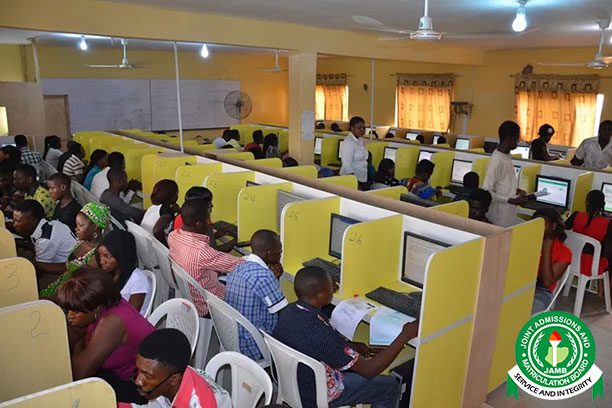
What is JAMB Mathematics?
JAMB Mathematics is the part of your exam where you solve problems using numbers, shapes, formulas, and logic. It tests your understanding of basic and advanced math topics you learned in secondary school. The thing is, a lot of students struggle because they don’t know exactly what topics to focus on. That’s why the syllabus is your best friend; it tells you exactly what JAMB expects you to know.
Think of it this way: the syllabus is like a map. If you follow it, you can avoid wasting time on topics that are rarely asked and spend more time on the ones that appear often.
Raed also: Use of English JAMB Syllabus 2026: Full Guide for UTME Candidates
Why Focus on the Syllabus?
Here’s the thing: many students just start solving random past questions without checking the syllabus. I’ve seen students spend hours on topics that hardly show up in the exam.
By focusing on the syllabus, you can:
- Know which topics are most important
- Plan your study time better
- Increase your chances of scoring higher marks
Ask yourself: Do you want to study smarter, not harder? Following the syllabus is the first step to doing that.
How JAMB Structures Mathematics Questions
Number of Questions and Time
In JAMB, Mathematics usually has 40 multiple-choice questions. You get 2 hours (120 minutes) to finish the exam. That might sound like a lot of time, but when you start solving tricky questions, it can go fast.
Here’s a simple table to show it clearly:
| Subject | Number of Questions | Duration | Marks |
|---|---|---|---|
| Mathematics | 40 | 2 hours | 40 |
Tip: This means you have about 3 minutes per question. Some questions are easy, some are hard, so you need to manage your time wisely.
Question Types
Most of the Mathematics questions in JAMB are multiple-choice. Each question has four options, and only one is correct.
You can expect questions on:
- Algebra – solving equations, simplifying expressions
- Geometry – shapes, angles, areas, volumes
- Trigonometry – sine, cosine, tangent, identities
- Statistics – mean, median, mode, probability
- Mensuration – areas and volumes of 2D and 3D figures
Example:
If x+3=7, what is x?
A. 3
B. 4
C. 5
D. 6
Most students get this right quickly, but some questions combine two topics, so you have to be alert.
Read each question carefully. Sometimes the options look similar, and picking too fast can make you lose marks.
Algebra
Algebra is a big part of JAMB Mathematics. Honestly, if you understand algebra well, you can score high marks because it comes up in many questions.
Basics of Algebra
Algebra is all about letters (variables) and numbers. The letters usually stand for unknown numbers.
Common things in basic algebra:
- Variables – letters like x, y, or a
- Expressions – combination of numbers and variables, e.g., 2x+5
- Simple Equations – e.g., x+3=7
Example:
Solve x+4=9
Solution: Subtract 4 from both sides → x=5
Tip: Always do the same thing to both sides of the equation. That’s the easiest way to avoid mistakes.
Advanced Algebra
In JAMB, you also see harder questions. These include:
- Quadratic Equations – equations like x2+5x+6=0
- Factorize → (x+2)(x+3)=0 → x=−2,−3
- Simultaneous Equations – two equations with two unknowns
- Example: x+y=5x−y=1 Add both → 2x=6 → x=3
Then find y=2
- Example: x+y=5x−y=1 Add both → 2x=6 → x=3
- Inequalities – like x+3>7
- Subtract 3 → x>4
Tip: Always check the direction of the inequality when multiplying or dividing by a negative number.
Tips to Solve Algebra Questions Quickly
- Look for easy simplifications first – don’t jump into long calculations
- Check for patterns – JAMB often repeats similar question types
- Use substitution – if an equation has multiple variables, substitute one to find the other
Example:
If 2x+3=11, what is x?
Subtract 3 → 2x=8
Divide by 2 → x=4
See? Short and simple.
Geometry
Geometry is all about shapes, sizes, and angles. In JAMB, geometry questions can be tricky, but if you know the formulas and basics, you can score well.
Plane Geometry
Plane geometry deals with flat shapes. These include:
- Triangles – area, angles, Pythagoras theorem
- Quadrilaterals – squares, rectangles, parallelograms, trapeziums
- Circles – circumference, area, chords, and arcs
Example:
Find the area of a rectangle with length 5cm and width 3cm.
Solution: Area = length × width = 5 × 3 = 15 cm²
Always check the units; JAMB loves to test that.
Solid Geometry
Solid geometry deals with 3D shapes. Common ones include:
- Cube – all sides equal
- Cuboid – length, breadth, height
- Sphere, Cone, Cylinder, Pyramid
Example:
Find the volume of a cube with side 4cm.
Solution: Volume = side³ = 4³ = 64 cm³
Important Formulas to Remember
Here’s a table with the most common geometry formulas you will need:
| Shape | Area | Perimeter / Surface Area | Volume |
|---|---|---|---|
| Square | s2 | 4s | s3 |
| Rectangle | l×w | 2(l+w) | l×w×h |
| Triangle | 21×b×h | Sum of sides | – |
| Circle | πr2 | 2πr | 34πr3 |
| Cylinder | – | 2πr(r+h) | πr2h |
| Cone | – | πr(r+l) | 31πr2h |
| Sphere | – | 4πr2 | 34πr3 |
Tip: Memorize these formulas; JAMB doesn’t give formulas in the question.
Tips for Geometry Questions
- Draw the shape if it’s not given
- Label all sides and angles
- Check your answer with a rough estimate
Trigonometry
Trigonometry is about angles and sides of triangles. It’s a topic that many students fear, but if you learn a few tricks, you can score easily.
Basic Trigonometry Ratios
The three main ratios are sine (sin), cosine (cos), and tangent (tan).
For a right-angled triangle:
- sin θ = Opposite / Hypotenuse
- cos θ = Adjacent / Hypotenuse
- tan θ = Opposite / Adjacent
Example:
If a triangle has a hypotenuse of 5cm and opposite side of 3cm, find sin θ.
Solution: sin θ = 3 ÷ 5 = 0.6
Tip: Remember SOH-CAH-TOA – it makes it easy to recall the formulas.
Trigonometric Identities and Applications
Some JAMB questions ask you to simplify expressions using identities. Important ones include:
- sin2θ+cos2θ=1
- 1+tan2θ=sec2θ
- 1+cot2θ=csc2θ
Example:
Simplify 1−sin2θ
Solution: Using sin2θ+cos2θ=1 → 1−sin2θ=cos2θ
Solving Trigonometry Questions in Exams
- Draw the triangle if it’s not given
- Label the sides and angles clearly
- Use ratios to find unknown sides or angles
- Double-check your answers
Example:
A right triangle has adjacent side = 4cm, opposite side = 3cm. Find tan θ.
Solution: tan θ = Opposite ÷ Adjacent = 3 ÷ 4 = 0.75
Trigonometry questions often mix with geometry, so knowing both helps.
Mensuration
Mensuration is all about measuring shapes. In JAMB, this usually means areas, perimeters, and volumes. If you know the formulas, you can solve most questions quickly.
2D Figures
For flat shapes, you usually need:
- Rectangle: Area = length×width, Perimeter = 2(length+width)
- Square: Area = side2, Perimeter = 4×side
- Triangle: Area = ½×base×height
- Circle: Area = πr2, Circumference = 2πr
Example:
Find the area of a triangle with base = 6cm and height = 4cm.
Solution: Area = ½ × 6 × 4 = 12 cm²
3D Figures
For 3D shapes, you need surface area and volume:
- Cube: Volume = side3, Surface area = 6×side2
- Cuboid: Volume = length×width×height, Surface area = 2(lw+lh+wh)
- Cylinder: Volume = πr2h, Surface area = 2πr(h+r)
- Sphere: Volume = 34πr3, Surface area = 4πr2
Example:
Find the volume of a cylinder with radius 3cm and height 7cm.
Solution: Volume = π×32×7=63π cm³
Quick Calculation Tips
- Memorize formulas; JAMB doesn’t provide them
- Round answers only if the question says so
- Always double-check your units (cm², cm³)
Some questions mix 2D and 3D shapes, so practice combining formulas.
Statistics
Statistics is about collecting, organizing, and analyzing data. In JAMB, most questions test your ability to calculate mean, median, mode, interpret graphs, and solve simple probability problems.
Data Handling: Mean, Median, Mode
- Mean (Average): Add all numbers and divide by how many numbers there are.
Example: Numbers: 2, 4, 6, 8 → Mean = (2+4+6+8)/4 = 20/4 = 5 - Median: The middle value when numbers are arranged in order.
Example: Numbers: 3, 5, 7 → Median = 5 - Mode: The number that occurs most frequently.
Example: Numbers: 2, 3, 3, 5 → Mode = 3
Tip: Always arrange numbers in order first; it makes median and mode easier to find.
Graphs and Charts
JAMB often gives questions with graphs or charts. You should know:
- Bar charts – height represents values
- Histograms – continuous data grouped in ranges
- Pie charts – show percentage of whole
- Line graphs – trends over time
Example:
If a bar chart shows 5 students scored A, 3 scored B, 2 scored C, what percentage scored B?
Solution: Total students = 5+3+2=10 → B = 3/10 × 100 = 30%
Probability Basics
Probability tells you how likely something will happen.
Formula: Probability = Number of favorable outcomes ÷ Total outcomes
Example:
Toss a fair die. What is the probability of getting 4?
Solution: Favorable outcome = 1 (number 4), Total outcomes = 6 → 1/6
Always simplify fractions and check if events are equally likely.
Sets, Functions, and Relations
These topics are about grouping numbers or objects and understanding how they relate to each other. They appear in JAMB every year.
Sets
A set is just a collection of objects or numbers. You need to know:
- Union (∪): All elements in either set
- Intersection (∩): Elements common to both sets
- Complement (’): Elements not in the set
Example:
- Set A = {1, 2, 3}, Set B = {2, 3, 4}
- A ∪ B = {1, 2, 3, 4}
- A ∩ B = {2, 3}
- A’ (complement of A) depends on universal set, e.g., U = {1,2,3,4,5} → A’ = {4,5}
Tip: Draw Venn diagrams; they make these problems much easier.
Functions and Relations
A function links one set of numbers to another.
- Example: f(x) = x + 2
- If x = 3, f(3) = 3 + 2 = 5
Mapping diagrams help you visualize which number goes to which.
- Relation: Any connection between two sets (not always one-to-one)
- Function: A special type of relation where each input has only one output
When a question asks “is it a function?” check that no input has more than one output.
Matrices and Determinants
Matrices and determinants are about numbers arranged in rows and columns. They come up in JAMB sometimes, but if you know the basics, they are easy to handle.
Introduction to Matrices
A matrix is a rectangular arrangement of numbers.
- Example:
A=[1324]
Basic operations:
- Addition: Add corresponding elements
[1324]+[2113]=[3437]
- Subtraction: Subtract corresponding elements
- Multiplication: Multiply row by column, not element by element
Multiplication is tricky; practice small 2×2 matrices first.
Determinants and Inverse
Determinant helps you solve equations and find inverses.
- For a 2×2 matrix:
A=[acbd]Determinant=ad−bc
- Inverse of a 2×2 matrix (if determinant ≠ 0):
A−1=ad−bc1[d−c−ba]
Example:A=[2134]Determinant=(2×4)−(3×1)=8−3=5
So the inverse is:A−1=51[4−1−32]
Always check that the determinant is not zero before finding the inverse.
Number Systems and Basic Arithmetic
This topic is all about understanding different types of numbers and how to work with them. Many students lose easy marks here, so it’s worth mastering.
Types of Numbers
Here are the main types of numbers you’ll see in JAMB:
- Natural numbers (N): 1, 2, 3, … (counting numbers)
- Whole numbers (W): 0, 1, 2, 3, …
- Integers (Z): … -3, -2, -1, 0, 1, 2, 3 …
- Rational numbers (Q): Numbers you can write as a fraction, e.g., 1/2, 3/4, -5/2
- Irrational numbers: Cannot be written as a fraction, e.g., √2, π
- Real numbers (R): All rational and irrational numbers
Tip: Know these well; JAMB sometimes asks which number belongs to which set.
Arithmetic Operations
You also need to be comfortable with fractions, decimals, percentages, ratios, and proportions.
- Fractions: Add, subtract, multiply, divide
- Example: ½ + ⅓ = (3+2)/6 = 5/6
- Decimals: Convert fractions to decimals and vice versa
- Example: ¾ = 0.75
- Percentages: Part of 100
- Example: 20% of 50 = 0.2 × 50 = 10
- Ratios: Compare two numbers
- Example: 2:3 = 2/3
- Proportions: Two ratios that are equal
- Example: 2/3 = 4/6 → True
Many JAMB questions involve converting between fractions, decimals, and percentages. Practice makes it easy.
Calculus Basics (Optional for JAMB)
Calculus is about how things change. In JAMB, you might see very simple questions on derivatives (differentiation) or integration.
Differentiation
Differentiation shows how fast a function changes.
- Example: If y=x2, the derivative is dy/dx=2x
- If x=3, the slope = 2 × 3 = 6
Tip: Most JAMB calculus questions are very simple. Focus on basic rules:
- Power rule: d/dx[xn]=nxn−1
- Sum rule: Derivative of sum = sum of derivatives
Integration
Integration is the opposite of differentiation. It finds the area under a curve.
- Example: If dy/dx=2x, then y=∫2xdx=x2+C
Don’t stress too much; only basic integrals appear in JAMB.
Practical Tips for Exam Day
JAMB Maths can be tricky if you’re not careful. But if you plan your time and avoid common mistakes, you can boost your score.
Time Management
- 40 questions in 120 minutes → about 3 minutes per question
- Start with easy questions first, then tackle harder ones
- Don’t spend too long on one question; mark it and come back later
Tip: Use rough sheets to calculate fast without making errors on the answer sheet.
Common Mistakes to Avoid
- Reading questions too fast – JAMB often includes tricky wording
- Mixing units – e.g., using cm² instead of m²
- Ignoring negative signs – especially in algebra and number operations
- Skipping formulas – always double-check you are using the right one
- Guessing blindly – if you must guess, eliminate wrong options first
Stay calm. If you panic, simple questions can seem hard.
Read also: Jamb Syllabus 2026 for all Subjects: What to Read Before the Exam
How to Use Past Questions Effectively
Past questions help you understand the exam style and see which topics appear most often. But you need to use them smartly, not just randomly.
Finding Past Questions
You can get past questions from:
- Official sources: JAMB Brochure
- Books: “JAMB Past Questions & Answers” series
- Online resources: Free PDFs and practice websites
Always use official or trusted sources. Some online PDFs have mistakes.
Practicing Strategically
- Start by solving one year at a time
- Identify topics that appear often
- Time yourself like a real exam
- After solving, check your answers and understand mistakes
Don’t just memorize answers; focus on understanding how to solve each type of question.
Recommended Textbooks and Resources
Using the right books and online tools makes JAMB Maths preparation much easier. You don’t need fancy materials; just what’s reliable and easy to understand.
Books Every Student Should Have
- JAMB Mathematics Syllabus 2026 – Official brochure from JAMB
- New General Mathematics for Senior Secondary School – covers most topics clearly
- Essential Mathematics for JAMB – practice questions and solved examples
- JAMB Past Questions & Answers (Mathematics) – for exam practice
Focus on understanding examples in the books, not just reading them.
Online Resources
- YouTube tutorials – many free lessons explain JAMB Maths step by step
- Websites – like JAMB official site and educational blogs
- Mobile apps – apps for past questions and practice quizzes
Use online resources to practice daily, especially for tricky topics like trigonometry and algebra.
Sample Study Plan
A study plan helps you cover all topics without stress. Here’s an example you can follow or adapt.
Daily Study Schedule
| Time | Activity |
|---|---|
| 6:00 – 7:00 am | Revise yesterday’s topics |
| 7:00 – 8:00 am | Practice Algebra problems |
| 8:00 – 8:30 am | Short break |
| 8:30 – 9:30 am | Geometry practice (formulas & questions) |
| 9:30 – 10:30 am | Trigonometry practice |
| 10:30 – 11:00 am | Review mistakes & formulas |
| Evening (Optional) | Quick revision or online quiz |
Keep sessions short and focused. Take breaks to avoid burnout.
Weekly Revision Plan
| Day | Topics to Cover |
|---|---|
| Monday | Algebra (basic + advanced) |
| Tuesday | Geometry (plane & solid) |
| Wednesday | Trigonometry + Mensuration |
| Thursday | Statistics + Sets, Functions, Relations |
| Friday | Matrices + Determinants |
| Saturday | Number systems + Arithmetic |
| Sunday | Past questions review + weak topic revision |
At the end of the week, mark your progress and focus more on topics you struggle with.
Read also: JAMB Registration 2026: Dates, Requirements, How to Apply, and Full Guide
FAQs About JAMB Mathematics Syllabus 2026
1. What topics carry the most marks in JAMB Maths?
Algebra, Geometry, and Trigonometry usually carry the most questions. Focus on these first, but don’t ignore Mensuration, Statistics, or Number Systems.
2. Can I pass JAMB Maths without studying all topics?
Yes, it’s possible if you master the high-frequency topics and practice past questions. But knowing all topics increases your confidence and chances of a high score.
3. How many questions involve Trigonometry?
Typically, 3–5 questions come from Trigonometry each year. They are usually straightforward if you know SOH-CAH-TOA and basic identities.
4. Are Calculus questions common in JAMB Maths?
Not really. If they appear, they are very basic differentiation or integration questions. Focus more on algebra, geometry, and other core topics first.
5. What’s the easiest topic to score high in?
Many students find Number Systems, Arithmetic, and Mensuration easy. These are formula-based, so memorizing the formulas and practicing questions helps you score fast.
6. How long should I practice past questions daily?
About 1–2 hours daily is enough if you also study topics from the syllabus. Focus on solving and understanding mistakes rather than just memorizing answers.
Conclusion
JAMB Mathematics 2026 doesn’t have to be scary. If you focus on the right topics, practice past questions, and follow a clear study plan, you can score high.
Remember:
- Algebra, Geometry, and Trigonometry are the most important topics.
- Mensuration, Statistics, Number Systems, and Matrices also appear every year.
- Past questions show you the exam style and help you spot common patterns.
- Daily practice and time management make a big difference on exam day.
The key is to study smart, not just hard. Start early, stay consistent, and check your progress every week.
Ask yourself: Are you ready to take control of your preparation today? If yes, follow the tips in this guide, and you’ll be more confident walking into the exam hall.