
I will show you every topic in the JAMB Commerce syllabus, explain them in simple words, and share examples you can relate to. Think of buying and selling in the market, helping your parents with business, or seeing how banks work in real life.
If you understand this syllabus well, you can score very high in UTME Commerce.
But let me ask you something first;
Have you ever read Commerce and felt confused because the textbook sounded too big or too serious?
That’s what I’m fixing here.
Read also: JAMB Registration 2026: Dates, Requirements, How to Apply, and Full Guide
What JAMB Commerce Is All About
Meaning of Commerce in JAMB
Commerce, in simple words, is about buying, selling, and helping goods move from where they are made to where people need them. That’s it. Nothing scary.
When JAMB talks about Commerce, they are not trying to confuse you with big grammar. They want to know if you understand how business works in real life. Think about the woman selling rice in your area, the shop that sells phone accessories, or even someone running an online business on WhatsApp. All of that is Commerce.
Commerce deals with trade and all the activities that support trade.
Trade means buying and selling. The support part includes things like transport, banking, insurance, storage, and advertising.
Let me ask you a quick question;
When goods are produced in a factory, can the producer sell everything by himself without help?
Of course not. That’s where Commerce comes in.
In JAMB, Commerce focuses on:
- How goods move from producers to consumers
- How services help buying and selling
- How businesses are owned and managed
- How money, banks, and insurance support trade
If you understand Commerce as “real-life business activities,” half of the fear is already gone.
Why JAMB Sets Commerce Questions
JAMB does not set Commerce questions just to make students fail. The thing is, Commerce is linked to everyday life and future careers.
JAMB wants to test:
- If you understand how markets work
- If you know how businesses survive
- If you can apply Commerce ideas to real situations
That’s why many JAMB Commerce questions come as short stories. They may describe a trader, a company, or a bank, then ask you what is happening in that situation.
For example, JAMB may describe someone importing goods from another country and ask;
Is this home trade or foreign trade?
Or they may talk about a business owned by two people sharing profit and loss and ask;
What type of business ownership is this?
JAMB wants to see if you can think, not just cram notes.
Another reason JAMB sets Commerce is because it prepares students for courses like:
- Business Administration
- Marketing
- Accounting
- Economics
- Entrepreneurship
So if you are planning to study any business-related course, Commerce is already helping you.
Let me ask you something important;
Do you notice that many JAMB Commerce questions repeat the same ideas every year, just in different ways?
Yes, they do. That’s why understanding the syllabus is smarter than reading random textbooks.
How Commerce Relates to Your Daily Life
Commerce is not only inside textbooks. You see it every day.
When your parent buys goods from a wholesaler to sell in a shop, that is Commerce.
When a business uses a bank to save money or collect payment, that is Commerce.
When goods are moved from Lagos to Abuja by truck, that is Commerce.
When a company advertises on radio or social media, that is Commerce.
JAMB expects you to connect these daily activities to Commerce topics.
Once you start seeing Commerce like this, questions stop looking confusing. Instead, they start looking familiar.
What You Should Understand Before Reading Further
Before we go deeper into the syllabus, keep these points in mind:
- Commerce is practical; not just theory
- JAMB likes simple definitions and clear examples
- Many topics are connected; if you understand one, others become easier
- Past questions repeat ideas again and again
If you read slowly and understand each topic, you don’t need to cram.
How JAMB Commerce Questions Are Set
Many students fail Commerce not because they don’t read, but because they don’t understand how JAMB asks questions. Once you understand the pattern, answering becomes easier.
CBT Format and Question Style
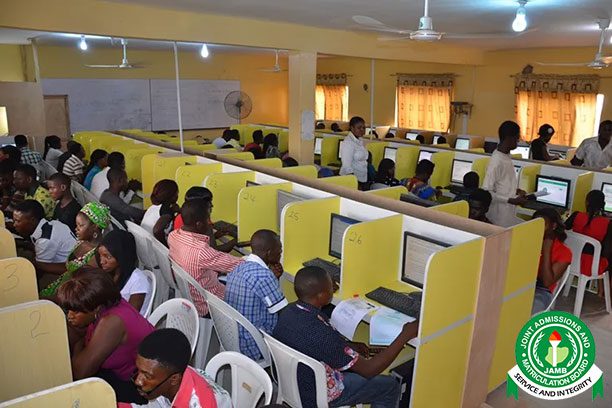
JAMB Commerce is written in CBT format. That means you answer questions on a computer and choose the correct option from A to D.
Most JAMB Commerce questions are:
- Short and direct
- Based on everyday business situations
- Written in simple English, but tricky
JAMB rarely asks long theory questions. Instead, they give you a situation and expect you to know the correct Commerce idea behind it.
For example, a question may say:
A trader buys goods from within Nigeria and sells them in another state.
Then JAMB asks;
What type of trade is this?
If you understand the syllabus, you will quickly know it is home trade, not foreign trade.
Let me ask you this;
Have you noticed that JAMB sometimes uses long stories just to test one small idea?
That’s why understanding concepts is better than cramming definitions.
Common Patterns in JAMB Commerce Questions
JAMB Commerce questions usually follow these patterns:
- Definition-based questions
They test if you know the meaning of terms like trade, insurance, banking, or production. - Example-based questions
They give you a real-life situation and ask what concept it represents. - Difference questions
They ask you to choose the correct difference between two things, like wholesaler and retailer. - Function questions
They test what something does, like the functions of banks or insurance.
If you study topics with examples in mind, these questions become easy.
How Marks Are Shared in Commerce
JAMB does not tell students exactly how many questions come from each topic. But from past questions, some areas appear more often.
These topics usually carry more questions:
- Trade
- Aids to trade
- Banking
- Insurance
- Business ownership
Other topics may have fewer questions but are still important.
Skipping any topic is risky, because JAMB can bring questions from anywhere in the syllabus.
Let me be honest with you;
Some students ignore topics like trade documents or consumer protection, thinking they are small. Then JAMB brings two or three questions from there, and they lose easy marks.
Why JAMB Repeats Questions Every Year
JAMB repeats questions because Commerce ideas do not change often. Buying, selling, banking, and insurance work almost the same way every year.
They may change:
- Names in the question
- The situation used
- The way the question is asked
But the main idea stays the same.
That’s why past questions are your best friend. If you understand why an answer is correct, you can answer similar questions easily in the exam.
What This Means for You as a Student
This is what you should take from this step:
- Focus on understanding, not memorizing
- Link every topic to real life
- Practice past questions while studying
- Do not skip any topic
Commerce is one of the easiest subjects to score high in if you prepare the right way.
Full JAMB Commerce Syllabus Breakdown
Trade and Aids to Trade
If you understand this step very well, you already have a strong chance of scoring high in JAMB Commerce.
Trade
Meaning of Trade
Trade simply means buying and selling of goods and services.
When someone produces goods, they do not usually use everything themselves. They sell part or all of it to other people. That exchange is trade.
Anytime goods or services are exchanged for money, trade is taking place.
Let me ask you something;
If a farmer grows yam and sells it in the market, is that trade?
Yes, it is.
Trade helps goods move from people who have them to people who need them.
Types of Trade in JAMB Commerce
In JAMB Commerce, trade is divided into two main types:
- Home Trade
- Foreign Trade
You must understand the difference clearly; JAMB loves asking questions from here.
Home Trade
Meaning of Home Trade
Home trade is also called internal trade.
It means buying and selling of goods within the same country.
If goods are bought and sold inside Nigeria, it is home trade.
No country border is crossed in home trade.
Examples you can relate to:
- Buying rice produced in Kebbi and selling it in Lagos
- A trader buying goods from Aba and selling them in Abuja
- A supermarket buying products from Nigerian companies
All these are home trade.
Types of Home Trade
Home trade has two main types:
- Wholesale trade
- Retail trade
JAMB often asks questions comparing these two.
Wholesale Trade
Wholesale trade is when goods are bought in large quantities from producers and sold in smaller quantities to retailers.
A wholesaler acts as a middleman between producers and retailers.
Wholesalers do not sell directly to final consumers most of the time.
Examples:
- A trader buying cartons of noodles from a company and selling them to shop owners
- A distributor supplying beverages to many supermarkets
Functions of a Wholesaler
A wholesaler:
- Buys goods in bulk
- Stores goods in warehouses
- Breaks bulk into smaller units
- Bears risks like damage or spoilage
- Gives credit to retailers sometimes
Without wholesalers, retailers would suffer a lot.
Retail Trade
Retail trade is the final stage of home trade.
Retailers sell goods in small quantities directly to the final consumer.
Examples you know well:
- Provision shops
- Supermarkets
- Market stalls
- Online sellers
Anytime you buy something for personal use, you are dealing with a retailer.
Functions of a Retailer
A retailer:
- Sells goods to consumers
- Makes goods available near buyers
- Gives advice to customers
- Sometimes gives credit
- Provides after-sales services
Let me ask you;
When you buy something and return it because it is faulty, who handles that?
The retailer.
Foreign Trade
Meaning of Foreign Trade
Foreign trade is buying and selling of goods between different countries.
If goods cross Nigeria’s border, it becomes foreign trade.
Foreign trade involves the use of foreign currency.
Examples:
- Nigeria importing cars from Japan
- Nigeria exporting cocoa to Europe
Types of Foreign Trade
Foreign trade has three main types:
- Import trade
- Export trade
- Entrepôt trade
Import Trade
Import trade means buying goods from another country into Nigeria.
Nigeria imports goods we do not produce enough of.
Examples:
- Importing machines
- Importing electronics
- Importing some vehicles
Import trade brings goods into the country.
Export Trade
Export trade means selling goods produced in Nigeria to other countries.
Examples:
- Exporting cocoa
- Exporting crude oil
- Exporting palm oil
Export trade brings money into the country.
Entrepôt Trade
Entrepôt trade happens when a country imports goods, stores them, then re-exports them to another country.
Nigeria does not do much entrepôt trade, but JAMB still tests it.
The country acts as a middleman.
Aids to Trade
Now, this part is very important.
Trade cannot succeed on its own. It needs help. That help is called aids to trade.
Aids to trade are activities that support buying and selling.
Let me ask you;
If goods are produced but cannot reach buyers, will trade succeed?
No.
That’s why aids to trade exist.
Major Aids to Trade in JAMB Commerce
JAMB lists these main aids to trade:
- Transportation
- Communication
- Warehousing
- Banking
- Insurance
- Advertising
Each one solves a problem in trade.
Transportation
Meaning of Transportation in Commerce
Transportation is the movement of goods and people from one place to another.
Without transport, goods will remain where they are produced.
Transportation connects producers to consumers.
Importance of Transportation
Transportation:
- Moves goods to markets
- Reduces waste and spoilage
- Makes large-scale production possible
- Creates jobs
Examples you see every day:
- Trucks carrying goods on highways
- Ships carrying goods across seas
- Motorcycles delivering items
Communication
Meaning of Communication in Commerce
Communication is the transfer of information from one person to another.
In commerce, buyers and sellers must communicate.
Without communication, trade becomes slow and confusing.
Importance of Communication
Communication:
- Helps in placing orders
- Helps in advertising
- Helps in negotiation
- Saves time
Examples:
- Phone calls
- Emails
- Internet messages
Warehousing
Meaning of Warehousing
Warehousing means storing goods until they are needed.
Goods are not always sold immediately after production.
Warehousing helps to balance production and consumption.
Importance of Warehousing
Warehousing:
- Prevents shortage
- Protects goods from damage
- Helps stabilize prices
- Allows bulk production
Think about rice or grains;
If they are not stored properly, what happens?
They spoil.
Banking
Meaning of Banking in Commerce
Banking involves accepting deposits and giving out loans.
Banks help trade by providing money and payment services.
Without banks, large business transactions will be difficult.
Importance of Banking
Banks:
- Keep money safe
- Provide loans
- Help in payments
- Support foreign trade
Examples include First Bank, GTBank, and Access Bank.
Insurance
Meaning of Insurance
Insurance is a way of protecting against loss.
It means paying a small amount to avoid big loss in the future.
Insurance reduces fear in business.
Importance of Insurance
Insurance:
- Protects goods
- Encourages investment
- Reduces risk
- Gives peace of mind
Think about fire or accident;
Without insurance, who bears the loss?
The trader alone.
Advertising
Meaning of Advertising
Advertising is telling people about goods and services.
It helps businesses attract customers.
No matter how good a product is, people must know about it.
Importance of Advertising
Advertising:
- Creates awareness
- Increases sales
- Helps competition
- Educates consumers
Examples:
- Radio ads
- TV ads
- Online ads
Key Thing to Remember in This Step
Trade is the heart of Commerce, and aids to trade keep it alive.
If you understand trade and aids to trade well, many JAMB questions will look easy.
Production Topics You Must Study
Before goods can be sold, they must be produced. That’s why JAMB includes production in Commerce. Many students think production belongs only to Economics, but Commerce also tests it, especially how production links to trade.
Let me ask you first;
Can anyone sell what has not been made or prepared?
No. Production comes first.
Meaning of Production
Production means creating goods and services that satisfy human wants.
Production does not always mean manufacturing in a factory. Even services count.
Examples:
- A tailor sewing clothes
- A barber cutting hair
- A teacher teaching students
- A farmer growing crops
All these are production.
Any activity that adds value and satisfies human needs is production.
Types of Production
In JAMB Commerce, production is divided into three main types:
- Primary production
- Secondary production
- Tertiary production
You must understand each one clearly.
Primary Production
Primary production involves extracting raw materials from nature.
It is the first stage of production.
Examples:
- Farming
- Fishing
- Mining
- Lumbering
If raw materials are not available, other stages of production will stop.
Primary production provides raw materials for industries.
Secondary Production
Secondary production involves changing raw materials into finished or semi-finished goods.
This is where factories and industries come in.
Examples:
- Turning cocoa into chocolate
- Turning crude oil into petrol
- Turning cotton into clothes
Secondary production adds more value to raw materials.
Tertiary Production
Tertiary production involves services that help production and trade.
These services do not produce physical goods, but they are very important.
Examples:
- Transportation
- Banking
- Insurance
- Communication
Without tertiary production, goods may be produced but not sold.
Factors of Production
Factors of production are the resources needed to produce goods and services.
JAMB expects you to know them very well.
There are four main factors:
- Land
- Labour
- Capital
- Entrepreneur
Land
Meaning of Land in Production
Land means all natural resources used in production.
It does not only mean soil.
Land includes:
- Farmland
- Water
- Forests
- Minerals
Without land, production cannot take place.
Importance of Land
Land:
- Provides raw materials
- Supports farming
- Hosts factories and buildings
Example you can picture;
A farmer cannot grow crops without land.
Labour
Meaning of Labour
Labour means human effort used in production.
It includes both physical and mental work.
Examples:
- Factory workers
- Teachers
- Doctors
- Drivers
Labour turns ideas into reality.
Importance of Labour
Labour:
- Operates machines
- Provides skills
- Improves quality of goods
Without labour, machines will just stay there.
Capital
Meaning of Capital
Capital refers to man-made goods used to produce other goods.
It is not money alone.
Examples:
- Machines
- Tools
- Buildings
- Vehicles used for business
Capital helps to increase production.
Importance of Capital
Capital:
- Makes work easier
- Increases output
- Saves time
A factory with machines produces more than one without machines.
Entrepreneur
Meaning of Entrepreneur
An entrepreneur is the person who organizes all factors of production.
This person:
- Takes risks
- Makes decisions
- Plans production
Without an entrepreneur, land, labour, and capital will not work together.
Importance of Entrepreneur
The entrepreneur:
- Bears business risks
- Coordinates resources
- Drives innovation in business
Let me ask you;
If everyone is afraid to start a business, what happens to production?
It stops.
Read also: JAMB Syllabus 2026 for All Subjects: What to Read Before the Exam
Production and Commerce Connection
Production and Commerce are connected.
Production creates goods.
Commerce distributes goods.
One cannot survive without the other.
That’s why JAMB mixes questions from both areas.
Key Points to Remember
- Production creates goods and services
- Factors of production must work together
- Entrepreneurs take risks
- Commerce depends on production
If you understand production clearly, Commerce questions become simpler.
Commerce and Occupation
Occupation is about what people do to earn a living. JAMB includes this topic because Commerce is not only about goods and money; it is also about people and their work.
Let me ask you something simple;
What work do your parents, relatives, or neighbors do to survive?
That work is their occupation.
Meaning of Occupation
Occupation means any legal activity a person does to earn income.
It can be physical work, mental work, or service-based work.
Examples:
- Trading in the market
- Teaching in a school
- Driving a bus
- Working in a bank
As long as it brings income, it is an occupation.
Types of Occupation in JAMB Commerce
JAMB divides occupation into three main types:
- Industrial occupation
- Commercial occupation
- Services occupation
You must know the meaning and examples of each one.
Industrial Occupation
Meaning of Industrial Occupation
Industrial occupation involves producing goods from raw materials.
This type of occupation focuses on making things.
Examples:
- Farming
- Fishing
- Mining
- Manufacturing
Industrial occupation creates goods.
Importance of Industrial Occupation
Industrial occupation:
- Provides raw materials
- Creates finished goods
- Reduces unemployment
- Supports economic growth
Without industrial workers, there will be no goods to sell.
Commercial Occupation
Meaning of Commercial Occupation
Commercial occupation involves buying, selling, and distributing goods.
This is where Commerce fits in directly.
Examples:
- Traders
- Wholesalers
- Retailers
- Importers and exporters
Commercial occupation connects producers and consumers.
Importance of Commercial Occupation
Commercial occupation:
- Makes goods available
- Encourages production
- Creates jobs
- Supports specialization
Let me ask you;
If producers make goods but nobody sells them, what happens?
They waste.
Services Occupation
Meaning of Services Occupation
Services occupation involves providing services instead of physical goods.
These services help individuals, businesses, and society.
Examples:
- Teachers
- Doctors
- Lawyers
- Bankers
- Transport workers
Services make life and business easier.
Importance of Services Occupation
Services occupation:
- Supports production and trade
- Improves quality of life
- Creates employment
Think about banking or transport;
Can modern trade survive without them?
No.
Differences Between Types of Occupation
JAMB may ask you to compare occupations.
Quick idea to remember:
- Industrial creates goods
- Commercial distributes goods
- Services support both
If you remember this line, many questions become easy.
Occupation and Commerce Relationship
Occupation and Commerce work together.
Producers focus on making goods.
Traders focus on selling goods.
Service providers support both.
Commerce cannot exist without occupation.
Key Points to Remember
- Occupation means work done to earn income
- There are three main types
- Each type supports the economy
- JAMB often asks examples
Business Units and Ownership
Every business has an owner. Some businesses are owned by one person, some by two or more people, and some by many shareholders. JAMB wants you to understand the different ways businesses are owned and run.
Let me ask you first;
If you open a small shop with your own money and run it alone, what type of business is that?
That question alone can come out in JAMB.
Meaning of Business Unit
A business unit is an organization set up to produce or sell goods and services for profit.
It can be big or small.
- A roadside shop is a business unit
- A supermarket is a business unit
- A large company is also a business unit
The size does not matter; ownership does.
Types of Business Ownership in JAMB Commerce
JAMB focuses on these main types:
- Sole proprietorship
- Partnership
- Limited liability company
- Cooperative society
You must understand how each one works, their advantages, and their problems.
Sole Proprietorship
Meaning of Sole Proprietorship
Sole proprietorship is a business owned, controlled, and managed by one person.
The owner provides the capital, makes decisions, and takes all profits and losses.
This is the most common type of business in Nigeria.
Examples you see every day:
- Provision shops
- Hair salons
- Small phone repair shops
- Roadside food sellers
Features of Sole Proprietorship
A sole proprietorship:
- Has one owner
- Is easy to start
- Has small capital
- Owner takes all profit
The business and the owner are seen as one.
Advantages of Sole Proprietorship
Sole proprietorship:
- Is easy to set up
- Needs little capital
- Allows quick decision-making
- Owner enjoys all profits
That’s why many people start from here.
Disadvantages of Sole Proprietorship
But there are problems too.
Sole proprietorship:
- Has limited capital
- Owner bears all risks
- Business may die if owner dies
- Workload can be too much
Let me ask you;
If the owner falls sick, what happens to the business?
Most times, it stops.
Partnership
Meaning of Partnership
Partnership is a business owned and managed by two or more people.
These people are called partners.
They share:
- Capital
- Profit
- Loss
- Responsibilities
A partnership must be based on trust.
Features of Partnership
A partnership:
- Has two to twenty partners in many cases
- Is formed by agreement
- Shares profit and loss
- Partners take joint decisions
Advantages of Partnership
Partnership:
- Has more capital than sole proprietorship
- Shares risks
- Combines skills and ideas
- Workload is shared
This makes growth easier.
Disadvantages of Partnership
Partnership also has issues.
Partnership:
- Can have disagreements
- Partners share profit
- Business may end if a partner leaves
- Decisions may take time
That’s why a partnership agreement is important.
Limited Liability Company
Meaning of Limited Liability Company
A limited liability company is a business owned by shareholders.
The company is a separate legal entity from its owners.
This means the business can exist even if owners change.
Examples include companies like Dangote Group and Nestlé Nigeria.
Features of Limited Liability Company
A limited liability company:
- Has many shareholders
- Can raise large capital
- Has limited liability
- Is legally recognized
Advantages of Limited Liability Company
Limited liability company:
- Has access to large capital
- Owners are not fully responsible for debts
- Has continuity
- Can attract skilled workers
This is why big businesses choose this type.
Disadvantages of Limited Liability Company
But it also has problems.
Limited liability company:
- Is hard to set up
- Needs many legal steps
- Decisions may be slow
- Requires proper management
Cooperative Society
Meaning of Cooperative Society
A cooperative society is a business owned and controlled by members for mutual benefit.
The main aim is not just profit, but helping members.
Members contribute money and enjoy shared benefits.
Examples:
- Farmers’ cooperative societies
- Thrift and credit societies
Features of Cooperative Society
A cooperative society:
- Is owned by members
- Has equal voting rights
- Shares surplus among members
- Focuses on welfare
Advantages of Cooperative Society
Cooperative society:
- Encourages savings
- Helps members financially
- Reduces exploitation
- Promotes unity
Disadvantages of Cooperative Society
But it also has limits.
Cooperative society:
- Has limited capital
- Decisions can be slow
- Poor management may occur
Comparing Business Ownership Types
Here’s a simple way to remember them:
- Sole proprietorship; one owner
- Partnership; two or more owners
- Limited liability company; many shareholders
- Cooperative society; members helping each other
If you remember ownership first, other details become easier.
Why JAMB Loves This Topic
JAMB loves business ownership because:
- Questions are direct
- Examples are simple
- Students still make mistakes
Many questions start with a short story. Once you identify the ownership type, the answer is clear.
Trade Associations and Chambers of Commerce
Many students rush this topic, but the thing is, JAMB uses it to test if you understand how businesses protect themselves and work together.
Let me ask you first;
If traders are being treated unfairly, do you think they will fight alone or join together?
Most times, they join together. That’s the idea here.
Meaning of Trade Association
A trade association is an organization formed by people in the same line of business to protect their interests.
Members of a trade association do similar work.
Examples:
- Association of traders
- Association of manufacturers
- Association of transport operators
They come together to speak with one voice.
Reasons Trade Associations Are Formed
Trade associations are formed to:
- Protect members from unfair treatment
- Fix prices in some cases
- Improve product quality
- Set rules for members
Without trade associations, businesses may suffer exploitation.
Functions of Trade Associations
JAMB expects you to know these functions.
Trade associations:
- Protect members’ interests
- Set standards for goods
- Settle disputes among members
- Educate members
- Represent members to the government
Let me ask you;
If government plans a new policy that affects traders, who speaks for them?
Trade associations.
Advantages of Trade Associations
Trade associations:
- Promote unity
- Reduce unfair competition
- Improve quality of goods
- Give members a strong voice
Disadvantages of Trade Associations
They also have problems.
Trade associations:
- Can encourage price fixing
- May limit competition
- Sometimes protect bad members
Chambers of Commerce
Now let’s talk about chambers of commerce. Students often confuse this with trade associations.
Meaning of Chamber of Commerce
A chamber of commerce is an organization that promotes business activities in a country or area.
Unlike trade associations, members do not have to be in the same line of business.
Chambers of commerce focus on the general business environment.
Examples include Lagos Chamber of Commerce and Industry and Nigerian Association of Chambers of Commerce, Industry, Mines and Agriculture.
Functions of Chambers of Commerce
Chambers of commerce:
- Promote trade and industry
- Advise government on business matters
- Organize trade fairs
- Provide business information
- Encourage investment
They help businesses grow in a safe environment.
Differences Between Trade Association and Chamber of Commerce
This is a common JAMB area.
Simple difference to remember:
- Trade association; same line of business
- Chamber of commerce; different businesses
If you remember this line, many questions become easy.
Why JAMB Tests This Topic
JAMB wants to see if you understand:
- Cooperation in business
- Business protection
- Business development
Questions are usually direct and easy if you read this part well.
Money and Banking
Money and banking are part of everyday life. You see them when people save money, collect loans, or pay for goods. JAMB includes this topic because trade cannot work well without money and banks.
Let me ask you something simple;
If there was no money, how would people buy and sell things today?
Life would be very hard.
Meaning of Money
Money is anything that is generally accepted as a means of exchange.
That means people agree to use it to buy and sell goods and services.
Examples of money you know:
- Naira notes and coins
- Bank deposits
- Electronic transfers
Money makes trade simple and fast.
Functions of Money
JAMB expects you to know these functions clearly.
Money as a Medium of Exchange
Money is used to buy and sell goods.
Instead of exchanging goods for goods, people use money.
This removes the problem of barter.
Money as a Unit of Account
Money helps us measure value.
For example:
- A bag of rice costs ₦50,000
- A phone costs ₦120,000
Money helps us compare prices easily.
Money as a Store of Value
Money can be saved and used later.
If you keep money today, you can spend it tomorrow.
This helps planning and saving.
Money as a Standard for Deferred Payment
Money is used to pay debts in the future.
Loans, rent, and credit sales depend on this function.
Types of Money
JAMB may test this too.
Types of money include:
- Commodity money
- Paper money
- Bank money
Bank money includes cheques and electronic transfers.
Meaning of Banking
Banking involves accepting deposits from the public and giving out loans.
Banks also help people and businesses move money safely.
Without banks, large-scale trade will struggle.
Types of Banks in JAMB Commerce
JAMB focuses on these main types:
- Commercial banks
- Central bank
- Merchant banks
- Development banks
Commercial Banks
Meaning of Commercial Banks
Commercial banks are banks that accept deposits and give loans to the public.
They deal directly with individuals and businesses.
Examples include First Bank, GTBank, Access Bank, and UBA.
Functions of Commercial Banks
Commercial banks:
- Accept deposits
- Give loans and overdrafts
- Make payments easy
- Keep money safe
Think about ATM cards and transfers;
That’s commercial banking at work.
Central Bank
Meaning of Central Bank
The central bank is the bank of all other banks.
In Nigeria, this role is played by the Central Bank of Nigeria (CBN).
Functions of the Central Bank
The central bank:
- Issues currency
- Controls money supply
- Supervises commercial banks
- Acts as banker to the government
The central bank controls the financial system.
Merchant Banks
Meaning of Merchant Banks
Merchant banks deal with large businesses and international trade.
They do not serve small customers like commercial banks.
Functions of Merchant Banks
Merchant banks:
- Finance large projects
- Help in foreign trade
- Offer advisory services
Development Banks
Meaning of Development Banks
Development banks are set up to support specific sectors of the economy.
Examples include Bank of Industry (BOI) and Bank of Agriculture (BOA).
Functions of Development Banks
Development banks:
- Give long-term loans
- Support industrial growth
- Encourage development
Importance of Banking to Commerce
Banking:
- Provides capital
- Makes payment easy
- Supports foreign trade
- Encourages saving
Without banks, modern Commerce cannot survive.
Insurance in Commerce
Insurance sounds like a big word, but the idea behind it is very simple. Insurance is about protection from loss. In business, losses can happen anytime, so people look for a way to feel safe.
Let me ask you this;
If a trader’s shop catches fire and everything is destroyed, who bears the loss if there is no insurance?
The trader alone. That’s the problem insurance solves.
Meaning of Insurance
Insurance is an arrangement where a person pays a small amount regularly to protect against a big loss in the future.
The person paying is called the insured.
The company giving protection is called the insurer.
Insurance spreads risk instead of leaving it on one person.
How Insurance Works in Simple Terms
This is how it works in real life:
- A trader pays small money called premium
- The insurance company promises to help if loss happens
- If loss occurs, compensation is paid
So instead of crying alone, the trader gets help.
Principles of Insurance You Must Know
JAMB often asks questions from insurance principles. Don’t worry, they are easy if you understand them.
Utmost Good Faith
This means both the insured and insurer must tell the truth.
If someone hides important information, the insurance may not work.
Honesty is the foundation of insurance.
Insurable Interest
This means you can only insure what you care about and may lose.
You cannot insure another person’s property just for fun.
Let me ask you;
Can you insure your neighbor’s house without permission?
No.
Indemnity
Indemnity means compensation is not meant to bring profit.
Insurance only helps you return to your original position.
Contribution
If someone insures the same property with more than one company, all companies share the loss.
This prevents cheating.
Types of Insurance in JAMB Commerce
JAMB focuses on these main types:
- Life insurance
- Fire insurance
- Marine insurance
- Motor insurance
Life Insurance
Meaning of Life Insurance
Life insurance is insurance taken on human life.
It pays money when:
- The insured dies, or
- The insurance period ends
Life insurance helps families after death.
Importance of Life Insurance
Life insurance:
- Supports dependents
- Encourages saving
- Gives financial security
Fire Insurance
Meaning of Fire Insurance
Fire insurance protects buildings and goods against fire damage.
It is common among traders and factory owners.
Importance of Fire Insurance
Fire insurance:
- Protects goods and buildings
- Reduces business risk
- Encourages investment
Marine Insurance
Meaning of Marine Insurance
Marine insurance covers goods transported by sea, air, or land.
It is very important in foreign trade.
Importance of Marine Insurance
Marine insurance:
- Protects goods in transit
- Encourages international trade
- Reduces fear of loss
Motor Insurance
Meaning of Motor Insurance
Motor insurance covers vehicles against accidents, theft, or damage.
In Nigeria, it is compulsory.
Importance of Motor Insurance
Motor insurance:
- Protects vehicle owners
- Covers accident losses
- Supports transport business
Importance of Insurance to Commerce
Insurance:
- Reduces fear in business
- Encourages investment
- Protects goods and property
- Supports trade growth
Without insurance, many people will be afraid to do business.
Advertising and Marketing
Advertising and marketing help businesses let people know about their products and sell more goods. If no one knows about a product, it cannot sell—even if it is the best product in the world.
Let me ask you;
Have you ever bought something because you saw it on TV, Instagram, or heard about it from a friend?
That’s advertising at work.
Meaning of Advertising
Advertising is telling people about goods or services to encourage them to buy.
It can be done in many ways:
- Posters
- Radio ads
- TV commercials
- Online ads
Advertising is the voice of a business.
Types of Advertising
JAMB often tests the types of advertising. The main ones include:
Print Advertising
- Done using newspapers, magazines, posters, banners
- Example: A flyer in your neighborhood market
Broadcast Advertising
- Done on radio or TV
- Example: A Coca-Cola TV ad
Online Advertising
- Done using social media, websites, or apps
- Example: WhatsApp promotions, Instagram reels
Outdoor Advertising
- Done outside to attract attention
- Example: Billboards, shop signs
Advantages of Advertising
Advertising helps businesses by:
- Making people aware of products
- Increasing sales
- Building brand loyalty
- Educating customers about new products
Let me ask you;
If a shop sells rice but never tells anyone, will it sell much?
Probably not.
Disadvantages of Advertising
But there are some problems too:
- Can be expensive
- Can mislead customers if false claims are made
- May create unnecessary competition
So businesses must advertise wisely.
Marketing in Commerce
Marketing is the entire process of making goods available to the right people, at the right place, and at the right time.
Advertising is part of marketing, but marketing is bigger.
Think of marketing as the whole plan, and advertising as one tool in that plan.
Consumer Protection and Trade Documents
This topic is all about protecting buyers and making trade smooth. JAMB likes this because it is connected to everyday life.
Let me ask you;
Have you ever bought a product that was damaged or expired?
How would you expect the seller to respond?
That’s where consumer protection comes in.
Consumer Protection
Meaning of Consumer Protection
Consumer protection means laws, rules, and actions that safeguard buyers from being cheated or harmed.
It ensures:
- Products are safe
- Sellers are honest
- Prices are fair
Consumers have rights, and businesses have responsibilities.
Consumer Rights in JAMB Commerce
The main rights include:
- Right to Safety
- Products should not harm users
- Example: Food must be fresh, machines must be safe
- Right to Be Informed
- Consumers must get correct information
- Example: Labels on products showing expiry date, price, and ingredients
- Right to Choose
- Consumers can select from different products
- Example: Choosing between two brands of sugar
- Right to Be Heard
- Consumers can complain if something is wrong
- Example: Reporting a faulty phone to the seller
- Right to Redress
- Consumers can demand compensation for defective products
- Example: Returning a damaged item and getting a refund
Importance of Consumer Protection
Consumer protection:
- Builds trust in business
- Reduces fraud
- Encourages quality products
- Promotes fair trade
If consumers are not protected, businesses may lose customers.
Trade Documents
Trade documents are papers used in trade to make transactions clear and official.
JAMB often asks for examples or uses them in short scenario questions.
Common Trade Documents in JAMB
- Invoice
- A document showing what was sold and the price
- Used for payment and records
- Receipt
- Proof that money was received
- Example: Getting a receipt after buying airtime or paying for goods
- Bill of Lading
- Used in shipping goods
- Shows details of the goods transported
- Credit Note
- Shows that the buyer has been given a reduction or refund
- Example: Returned damaged goods
- Debit Note
- Shows extra amount owed by the buyer
- Packing List
- Details of goods in a shipment
- Helps check if everything ordered is delivered
Importance of Trade Documents
Trade documents:
- Keep business organized
- Help in disputes
- Provide proof of transactions
- Make foreign trade smooth
Imagine importing goods without documents, chaos!
How to Study JAMB Commerce and Pass Easily
Many students read a lot but fail Commerce because they don’t focus on what JAMB really tests. The good news is, Commerce is easy if you study the right way.
Let me ask you;
Do you want to spend hours reading without remembering anything, or do you want a simple plan that works?
I will guide you through a simple method.
Reading Plan That Works
A plan helps you organize your study time. Here’s a simple way:
- Start with the syllabus
- Read one topic at a time
- Understand definitions, examples, and functions
- Make short notes
- Use your own words
- Highlight keywords in bold
- Example: “Wholesaler: buys in bulk, sells to retailers”
- Use real-life examples
- Link topics to daily life
- Example: Banking → use your local bank
- Example: Advertising → WhatsApp ads in your area
- Review regularly
- Every 2–3 days, go over previous topics
- This helps your memory
- Don’t cram
- Cramming leads to confusion
- Focus on understanding and applying ideas
Commerce is about understanding, not memorizing.
Using Past Questions the Smart Way
Past questions are your best friend in JAMB Commerce. Here’s how to use them:
- Get past 10–15 years questions
- Focus on repeated topics: trade, aids to trade, banking, insurance, business ownership
- Solve before reading answers
- Try to answer yourself
- Check if your reasoning matches
- Understand, don’t memorize answers
- JAMB often changes the story but asks the same idea
- Time yourself
- Practice under exam conditions
- Helps with speed and accuracy
If you combine syllabus understanding and past questions, Commerce becomes very easy.
Tips for Better Focus
- Study in a quiet place
- Use short breaks every 40–50 minutes
- Teach someone else what you learned; it improves memory
- Group related topics together, e.g., trade + aids to trade + banking
Common Mistakes Commerce Students Make
If you know these mistakes and avoid them, you already have an advantage over other students.
Let me ask you;
Have you ever seen someone get a question right in class but then choose the wrong option in an exam?
That happens more often in Commerce than you think.
Mistake 1: Not Understanding the Question
Many students read quickly and pick the first answer that looks right.
- JAMB often uses stories or examples
- The right answer may be hidden in the details
- Skipping key words like “primary trade” or “internal trade” causes mistakes
Tip: Read the question carefully, underline key words, then choose the answer.
Mistake 2: Ignoring Definitions
Definitions are very important in Commerce. Students often try to guess instead of recalling the definition.
Example:
- Question: “Buying goods from another country is called?”
- Wrong answer often chosen: “Home trade”
- Correct answer: “Foreign trade”
Tip: Learn short, clear definitions and recall them quickly.
Mistake 3: Not Linking Topics to Real Life
JAMB likes practical, scenario-based questions. Students who only memorize lose marks.
Example:
- Scenario: A trader buys goods in Lagos and sells them in Abuja.
- Question: What type of trade?
- If you only memorized the textbook without linking it to real examples, you may confuse it with foreign trade.
Tip: Always connect topics to what you see in your daily life.
Mistake 4: Skipping Small Topics
Topics like trade associations, chambers of commerce, or trade documents are small but appear in exams.
- Many students skip them thinking they are “easy”
- Then JAMB asks 2–3 questions from there
- Those marks are easy but are lost
Tip: Cover all topics in the syllabus.
Mistake 5: Poor Time Management
Commerce is mostly multiple-choice, but spending too long on one question can waste time.
- Some students rush at the end and make careless mistakes
- Others spend too long thinking about simple questions
Tip: Divide your exam time wisely. If stuck, move on and return later.
Mistake 6: Not Practicing Past Questions
Many students rely only on textbooks. But JAMB loves repeating ideas from past exams.
- Without practice, questions feel “new” and confusing
- With practice, you recognize the pattern immediately
Tip: Solve as many past questions as possible. Focus on repeated themes.
FAQs for JAMB Commerce
1. What is the easiest way to score high in JAMB Commerce?
The easiest way is to understand concepts and use examples from daily life.
a. Don’t just memorize definitions.
b. Link topics like trade, banking, and insurance to real situations you see.
c. Practice past questions to recognize patterns.
2. Do I need to read every topic in the Commerce syllabus?
Yes. Every topic can appear in the exam, even small ones like trade associations or trade documents.
a. Cover all topics
b. Make short notes for revision
c. Use examples to remember them
3. How do I remember the types of trade?
Think simply:
i. Home trade → inside the country
ii. Foreign trade → between countries
Add examples:
i. Lagos to Abuja → home trade
ii. Nigeria to Europe → foreign trade
4. How can I quickly remember types of business ownership?
Use this line:
i. Sole proprietorship → one owner
ii. Partnership → 2 or more owners
iii. Limited company → many shareholders, legal entity
iv. Cooperative → group helping each other
Think of shops, friends, and big companies as examples.
5. Can I answer scenario questions even if I forget definitions?
Yes, if you link the scenario to real life.
Example:
Scenario: A trader insures his goods before shipping.
Even if you forget the exact definition of insurance, you can choose insurance because the story matches the concept.
6. How important are past questions?
Past questions are extremely important. JAMB often repeats ideas:
i. Trade and aids to trade
ii. Banking
iii. Insurance
iv. Business ownership
Practice them to see the pattern and gain confidence.
Conclusion and Final Tips
JAMB Commerce can be one of the easiest subjects to score high in, but only if you study smart, not just hard. The thing is, many students spend hours reading without understanding, and that’s why they lose marks.
Key Takeaways from This Guide
- Understand, don’t memorize
- Know what trade, banking, insurance, and production mean
- Use real-life examples to make concepts stick
- Cover the whole syllabus
- Even small topics like trade associations and trade documents are tested
- Skipping any topic can cost easy marks
- Use past questions
- Practice makes you familiar with JAMB’s style
- Focus on repeated topics like trade, banking, insurance, and business ownership
- Avoid common mistakes
- Read questions carefully
- Don’t rush answers
- Link scenarios to concepts
- Manage your exam time
- Practice with examples
- Think of shops, banks, and advertisements you see every day
- Relate occupations, trade types, and banking to real life
Final Exam Tips
- Make short notes and flashcards for quick revision
- Solve at least 5–10 past questions daily
- Revise every topic multiple times
- Stay calm during the exam and read every question carefully
My Advice to You
Commerce is a subject you can master with understanding.
If you know the topics, practice with examples, and solve past questions, you can easily score high.
Remember: JAMB Commerce tests your understanding, not how much you can memorize.